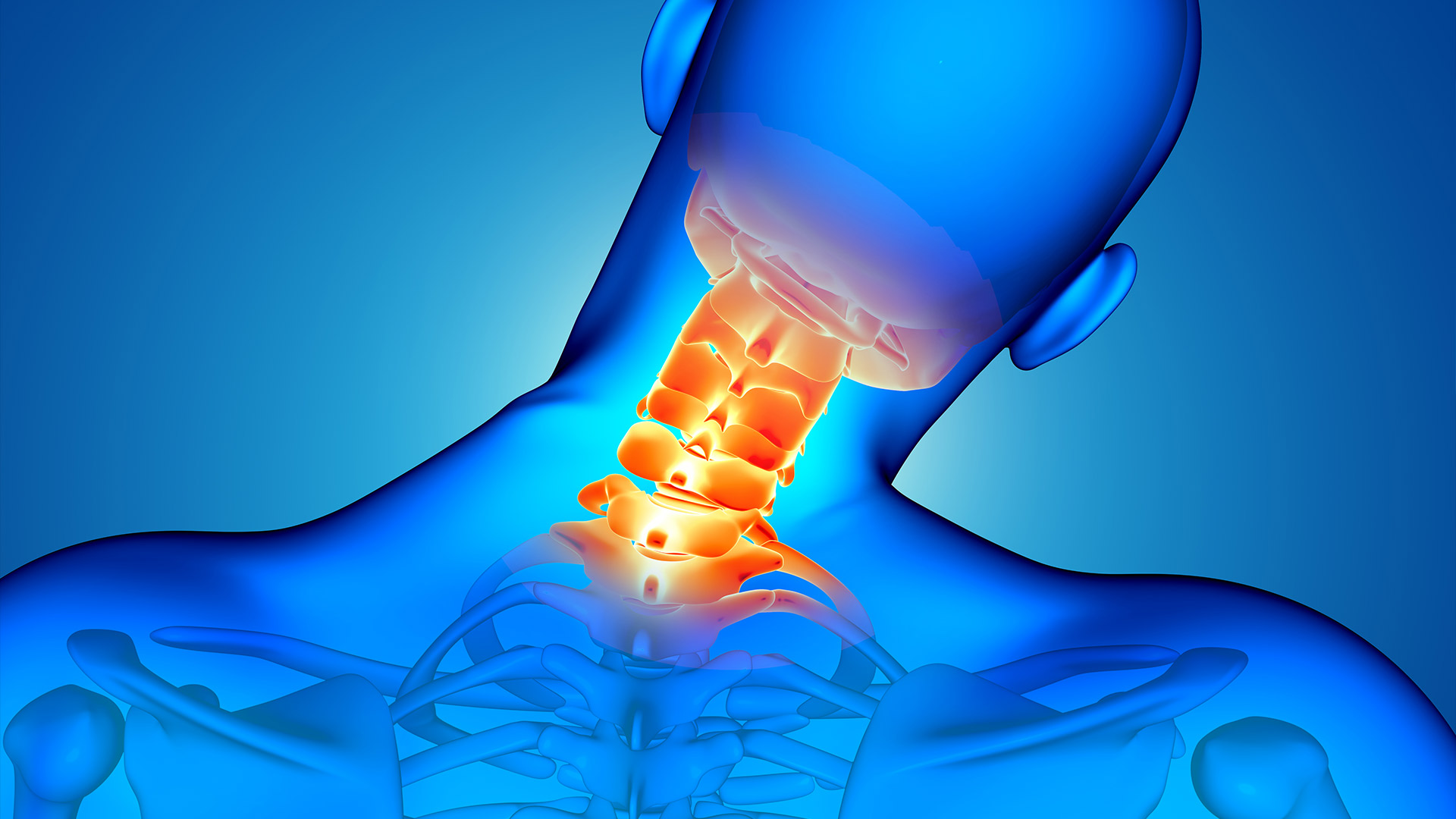
The cervical spine consists of seven vertebral bodies, with intervertebral discs between them and articulating joints in the posterior elements. Thanks to these joints and discs, the cervical vertebrae have a remarkable range of motion. In such a highly mobile region, wear and tear of these structures over time can inevitably lead to disc disorders. As these disc disorders progress, serious problems may develop due to narrowing of the spinal canal in the cervical region.
What Is a Cervical Herniated Disc?
The intervertebral disc material consists of two main components: the nucleus pulposus and the annulus fibrosus. The annulus fibrosus surrounds and contains the nucleus pulposus. When tears develop in the annulus fibrosus, the disc material may shift toward the spinal canal. This displacement is known as disc herniation. Clinical complaints and symptoms may develop depending on the size and extent of the herniation.
What Are the Most Common Symptoms of a Cervical Herniated Disc?
The most common symptoms of a cervical herniated disc include neck pain, numbness in the hands and arms, muscle weakness, and burning sensations. The order in which these symptoms appear and their severity may indicate the extent of the disc herniation and associated cervical spine problems. It should be remembered that these symptoms may be experienced differently by each patient.
Are You at Risk of Developing a Cervical Herniated Disc?
Because the cervical spine is highly mobile, it is more susceptible to wear and tear. Factors such as improper sleeping positions and non-ergonomic working environments can disrupt the biomechanics of the cervical spine, increasing the risk of disc degeneration and cervical disc herniation.
Office workers who must spend long hours in front of screens in poorly designed ergonomic environments are among the main risk groups. Similarly, people who habitually use tablets or smartphones for extended periods while keeping their necks bent forward may also be at increased risk.
Is There a Relationship Between Age and Cervical Disc Herniation?
Although symptoms associated with cervical disc herniation generally begin to appear between the ages of 30 and 40, when individuals become more active in their professional lives, this condition can occur in adults of any age.
How Is a Cervical Herniated Disc Diagnosed?
When symptoms develop, a comprehensive physical examination should be performed first. This examination includes assessing muscle strength in the upper extremities, sensory function, and reflexes.
If the physician considers it necessary, the diagnosis can be supported by imaging examinations such as X-rays, magnetic resonance imaging (MRI), and computed tomography (CT).
Electromyography (EMG) may also be used to evaluate the patient’s neurological condition.
What Treatment Methods Are Available for Cervical Disc Herniation?
Treatment methods for cervical disc herniation can be divided into two main categories: conservative (non-surgical) treatments and surgical treatments.
Non-surgical treatment options include medication, the use of a cervical collar, physical therapy, and nerve root injections.
When these treatments do not provide sufficient relief, or when neurological deficits are present, surgical treatment may become a more important option.
In general, a significant proportion of patients with cervical disc herniation can maintain a comfortable quality of life for extended periods with non-surgical treatment methods.
However, patients who do not benefit sufficiently from these treatments may experience improvement through various surgical techniques designed to relieve pressure on the nerve roots and spinal cord.
The primary surgical approach we use for this purpose involves removing the affected disc (microdiscectomy), decompressing the spinal canal and nerve roots, and placing supportive implants when necessary.
Based on these fundamental principles, each patient is evaluated individually, and the surgical procedure is tailored to the patient’s specific condition. With appropriate patient selection and individualized surgical planning, highly satisfactory outcomes can be achieved.