Herniated Disc Exercises: 10 Exercises You Can Do at Home
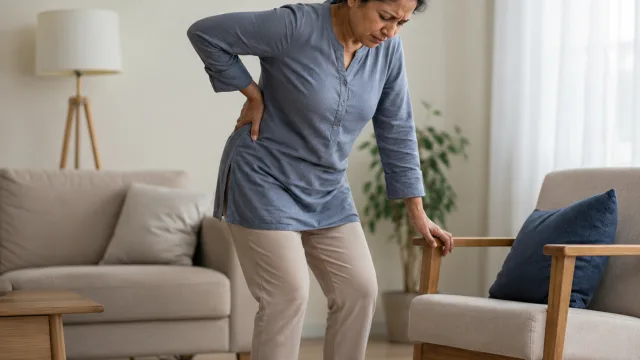
Herniated disc exercises – A lumbar herniated disc can cause lower back pain, hip pain, pain radiating into the legs, numbness, or tingling when the affected intervertebral disc puts pressure on nearby nerves. Appropriate exercises can help support the muscles surrounding the lower back, maintain mobility, and make daily activities easier to perform.
However, not all exercises are suitable for every patient with a herniated disc. Exercises should be selected according to the individual’s symptoms, physical condition, and assessment by a healthcare professional.
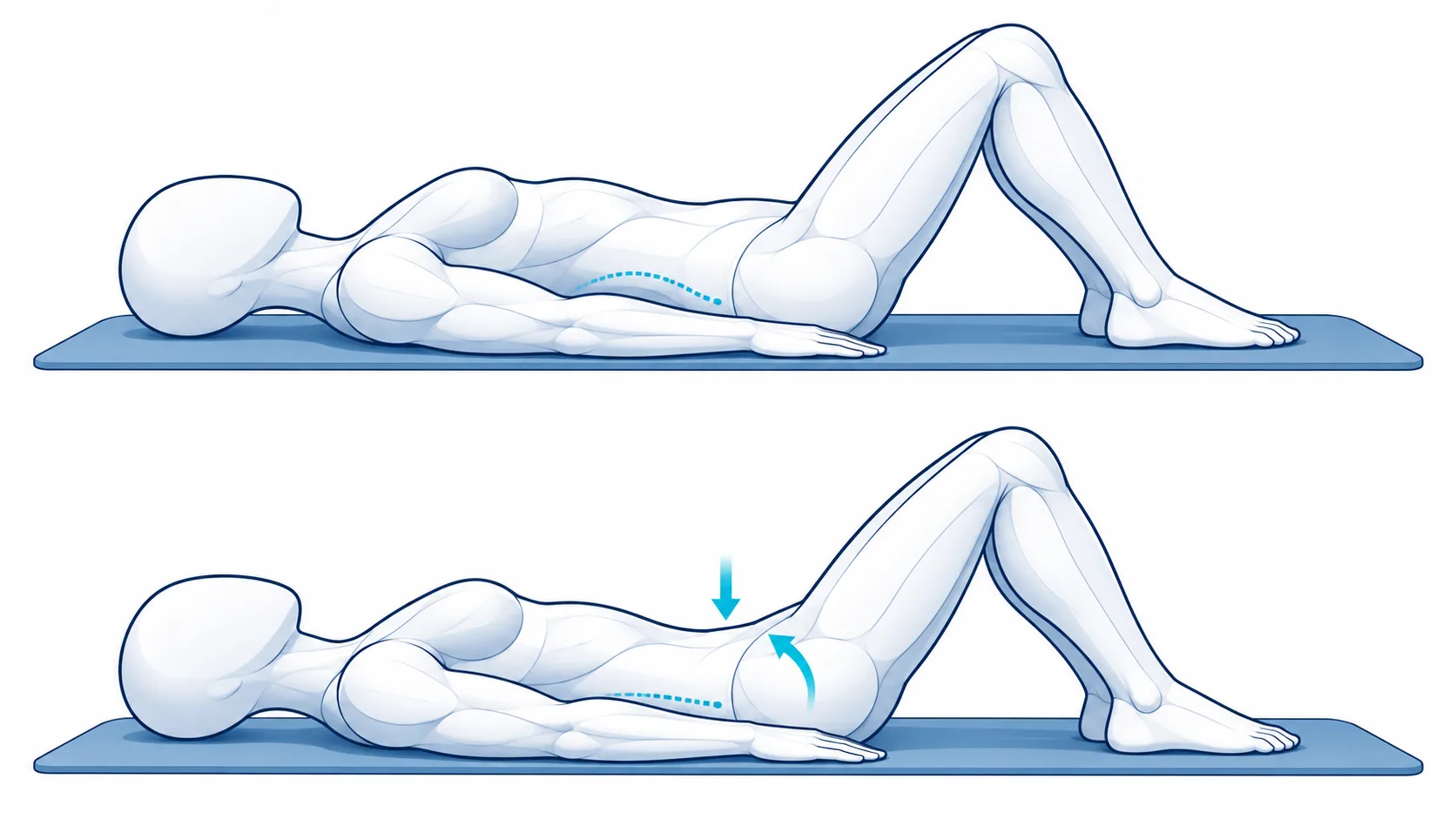
1. Pelvic Tilt Exercise
The pelvic tilt is one of the fundamental exercises that helps activate the deep abdominal muscles surrounding the lower back and encourages controlled pelvic movement.
How to Perform the Exercise
- Lie on your back, bend your knees, and place your feet flat on the floor.
- Keep your arms relaxed at your sides.
- Gently tighten your abdominal muscles to bring your lower back closer to the floor.
- Slowly rotate your pelvis backward.
- Hold the position for 3–5 seconds, then relax.
Recommended Practice: Start with 5–10 repetitions for 1 set.
Benefits: Supports abdominal muscle activation, helps improve pelvic control, and may enhance coordination of the muscles surrounding the lower back.
Precautions: Do not lift your hips off the floor during the movement. Rather than forcefully pressing your lower back down, perform small, controlled movements.
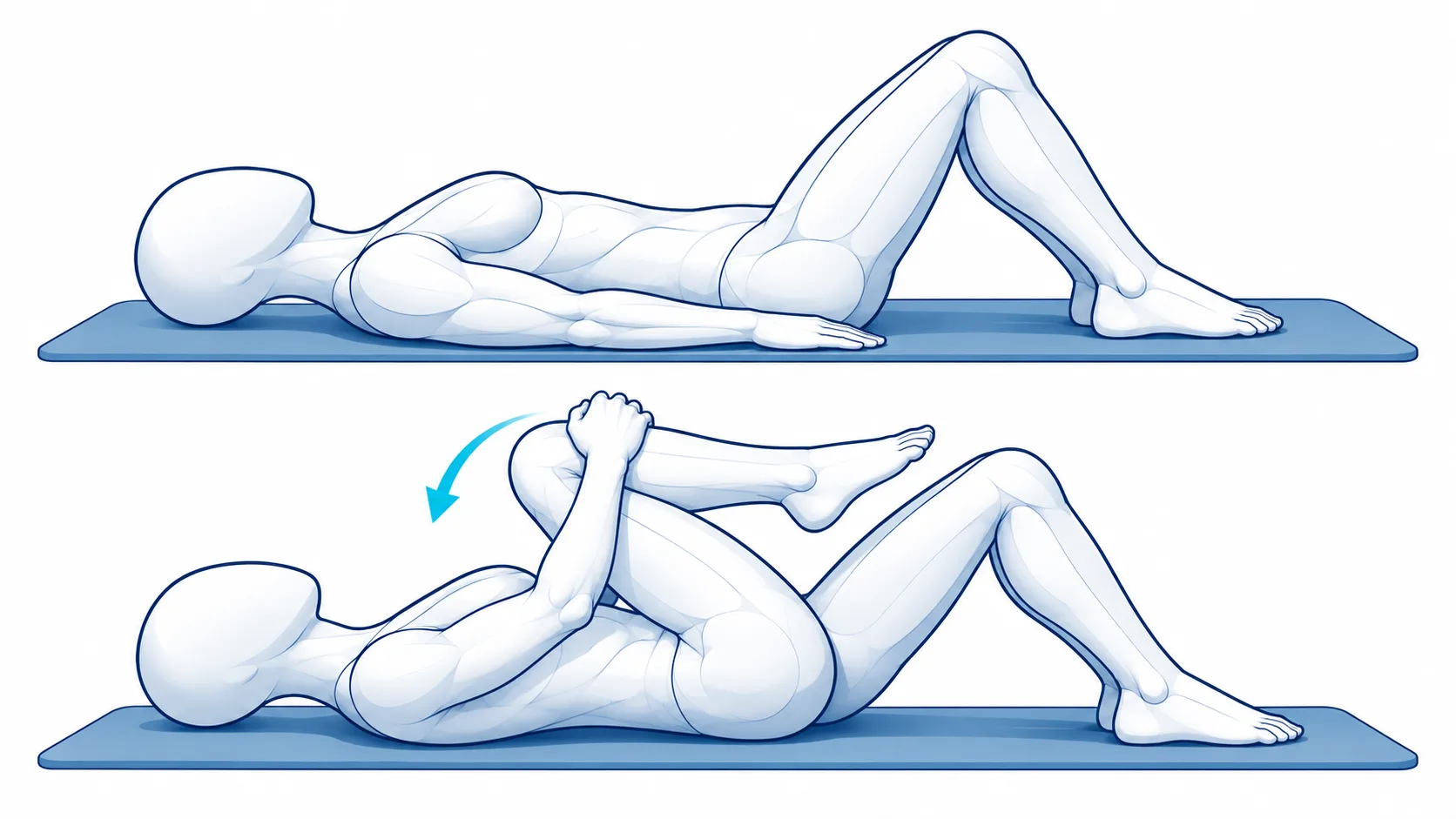
2. Single Knee-to-Chest Stretch
The single knee-to-chest stretch may help gently stretch the muscles surrounding the lower back and hips. It can be a suitable stretching option, particularly for individuals who experience relief with movement.
How to Perform the Exercise
- Lie on your back with both knees bent.
- Hold one knee with both hands.
- Gently bring your knee toward your chest without forcing the movement.
- Maintain the position while keeping your other foot on the floor.
- Return to the starting position and repeat the movement with the other leg.
Recommended Practice: Perform 3–5 repetitions for each leg, holding the stretch for 10–15 seconds if it feels comfortable.
Benefits: May support flexibility in the muscles surrounding the hips and contribute to improved lower back mobility.
Precautions: Stop the exercise if pulling your knee toward your chest increases pain radiating from your lower back into your leg. This movement may not be suitable for individuals whose symptoms worsen with forward bending.
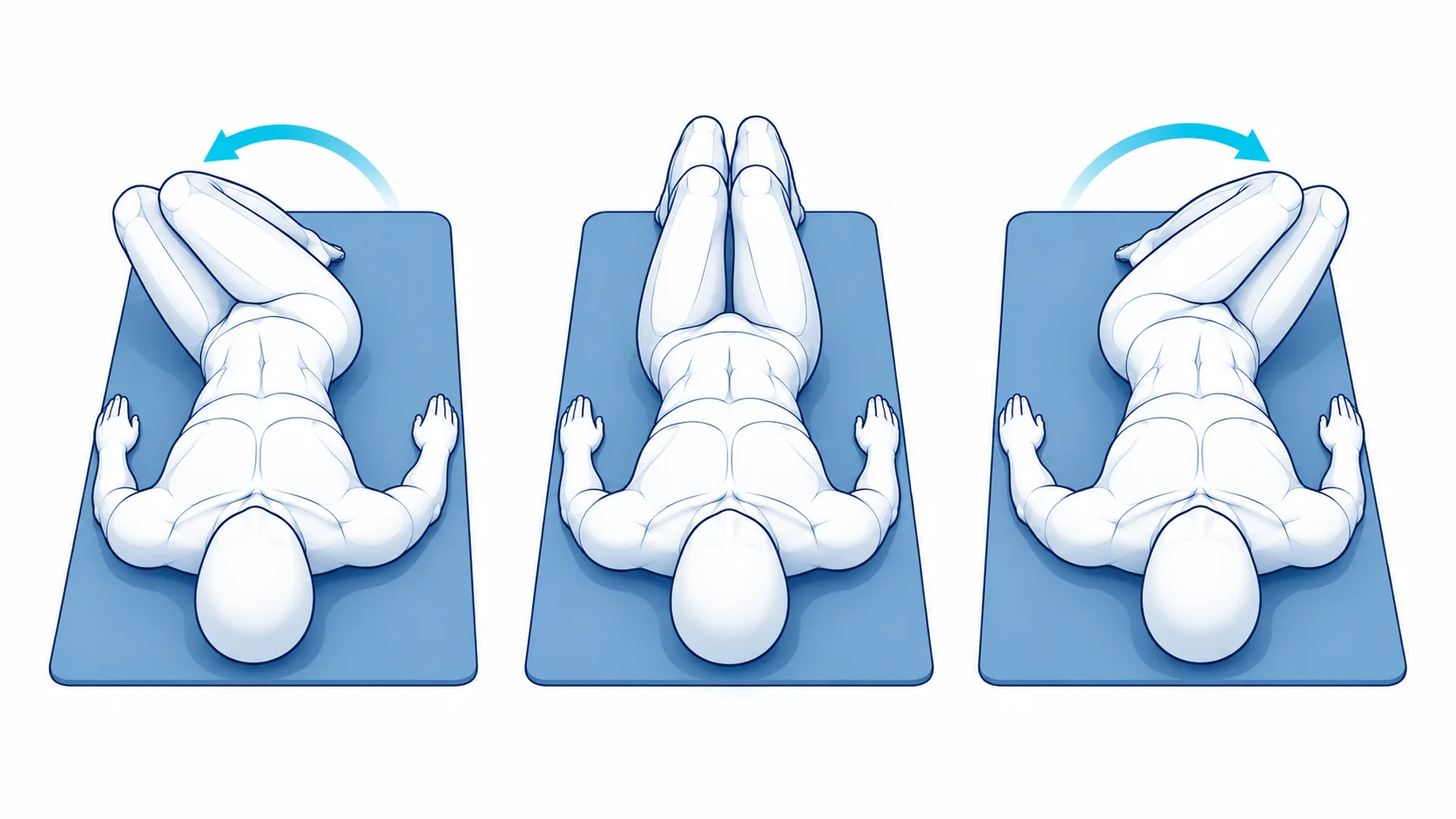
3. Supine Knee Rolls (Side-to-Side Knee Rotation)
The side-to-side knee rotation exercise is a gentle rotational movement used to support mobility in the lower back and hip region.
How to Perform the Exercise
- Lie on your back and bend your knees.
- Keep your feet and knees close together.
- Without lifting your shoulders off the floor, slowly lower both knees toward the right side.
- Pause briefly within a comfortable, pain-free range of motion.
- Bring your knees back to the center and repeat the movement toward the left side.
Recommended Practice: Perform 5–8 repetitions in each direction.
Benefits: May improve mobility in the lower back and hips and help develop controlled trunk rotation.
Precautions: Do not force your knees to touch the floor. Avoid this exercise if rotational movements increase your lower back or leg pain.
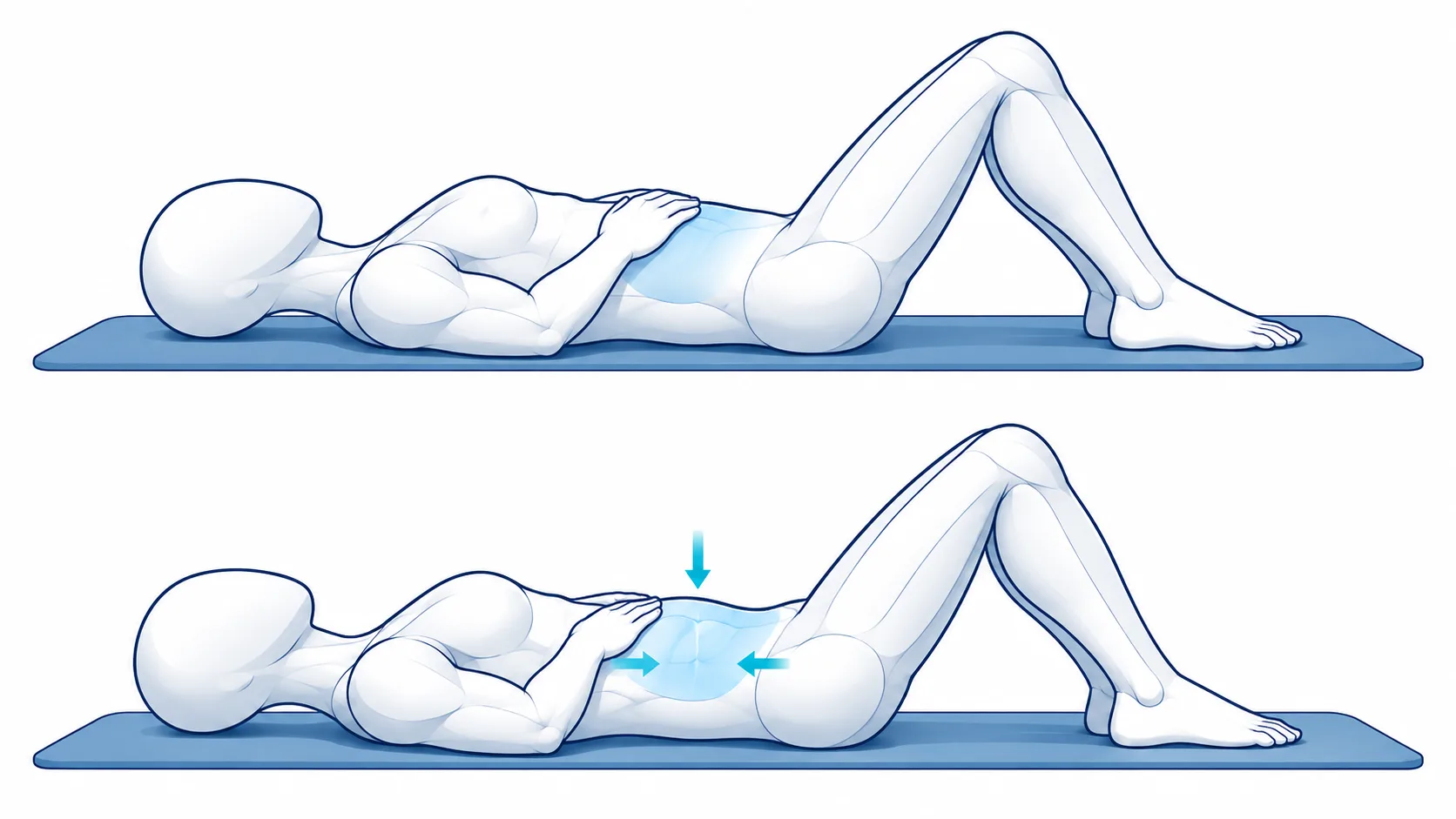
4. Abdominal Bracing Exercise
Abdominal bracing aims to improve the coordinated activation of the core muscles that support the spine. It is commonly included in programs designed to improve lumbar stability.
How to Perform the Exercise
- Lie on your back with your knees bent.
- Place your hands over your abdomen.
- Gently tighten your abdominal muscles as though preparing for a light impact to your stomach.
- Continue breathing normally without holding your breath.
- Maintain the contraction for 5 seconds, then relax.
Recommended Practice: Perform 5–10 repetitions for 1–2 sets.
Benefits: Supports core stability and may help improve controlled abdominal muscle activation during everyday movements.
Precautions: Avoid excessively pulling your abdomen inward or holding your breath. The exercise should not cause pain.
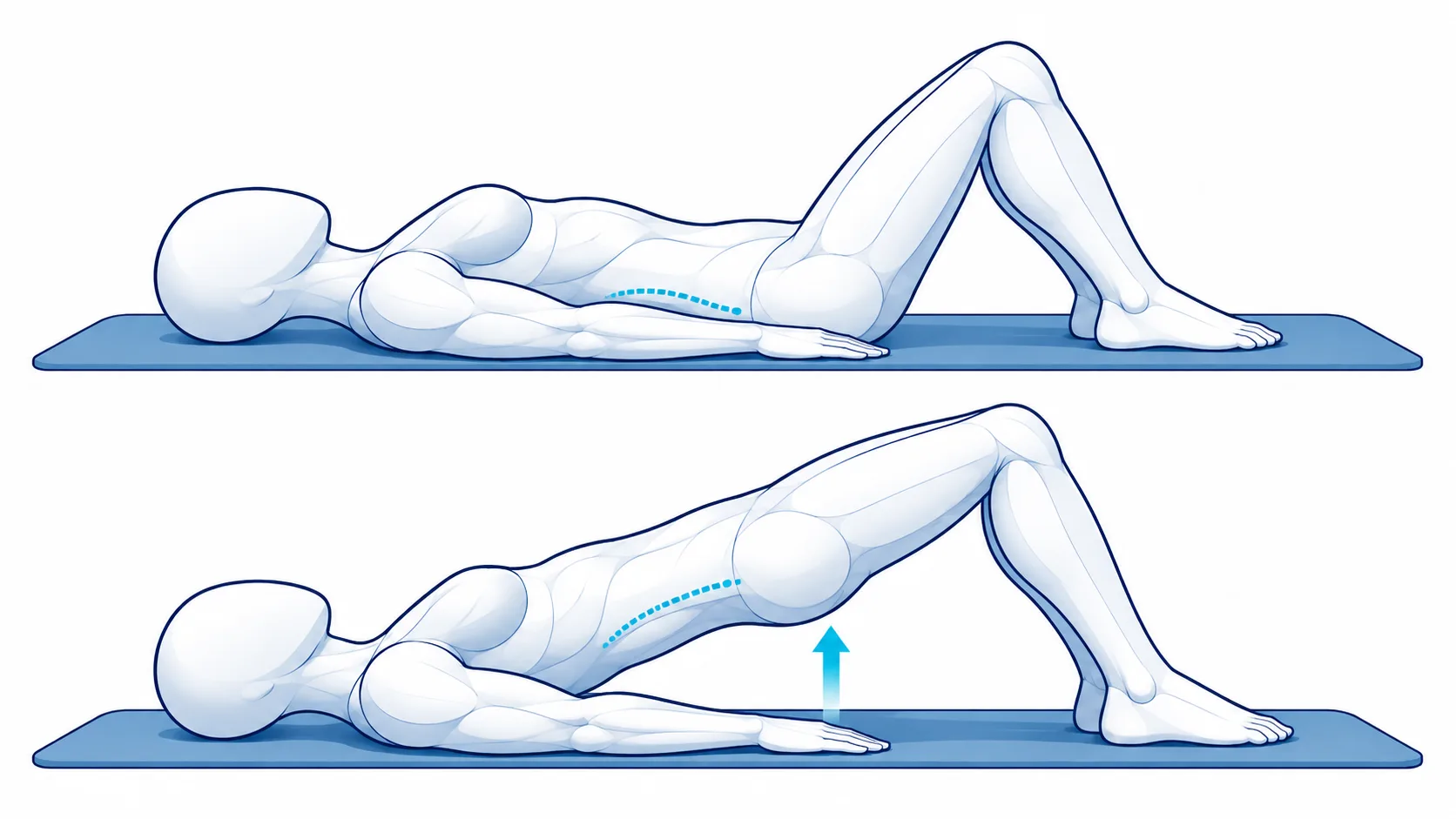
5. Glute Bridge Exercise
The glute bridge is an exercise used to strengthen the gluteal muscles, hamstrings, and core muscles. It may help improve the endurance of the muscles that support the lower back.
How to Perform the Exercise
- Lie on your back, bend your knees, and place your feet flat on the floor.
- Keep your arms alongside your body.
- Gently tighten your abdominal and gluteal muscles.
- Slowly lift your hips upward until your body forms an approximately straight line from your shoulders to your knees.
- Hold the position for 2–3 seconds, then lower your hips to the floor in a controlled manner.
Recommended Practice: Perform 5–10 repetitions for 1–2 sets.
Benefits: May support gluteal muscle strength, core control, and muscular endurance during functional movements.
Precautions: Avoid lifting your hips excessively high or over-arching your lower back. Stop the exercise if your lower back or leg pain increases.
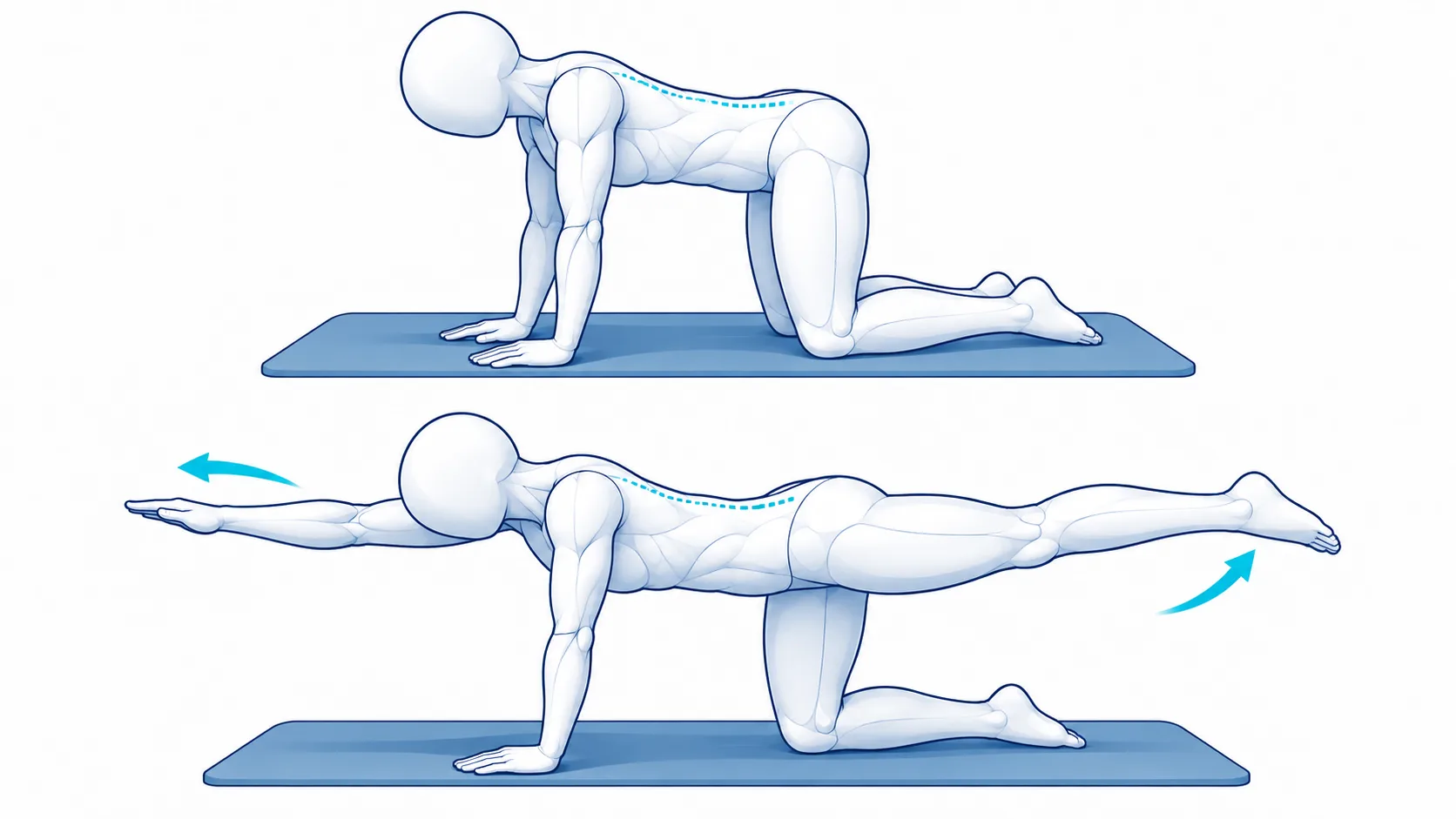
6. Bird Dog Exercise (Opposite Arm and Leg Extension)
The bird dog exercise activates the back, abdominal, and gluteal muscles that help maintain spinal stability. It is an important movement commonly used in lumbar stabilization programs.
How to Perform the Exercise
- Get into a hands-and-knees position, keeping your hands beneath your shoulders and your knees beneath your hips.
- Maintain your lower back in its natural, neutral position.
- Extend your right arm forward while simultaneously raising your left leg backward.
- Hold the position for 3–5 seconds without rotating your pelvis or excessively arching your lower back.
- Return to the starting position and repeat the movement with the opposite arm and leg.
Recommended Practice: Perform 5–8 repetitions on each side.
Benefits: May help improve spinal stability, coordination, and core muscle endurance.
Precautions: If you find it difficult to maintain balance, begin by lifting only one arm or one leg at a time.
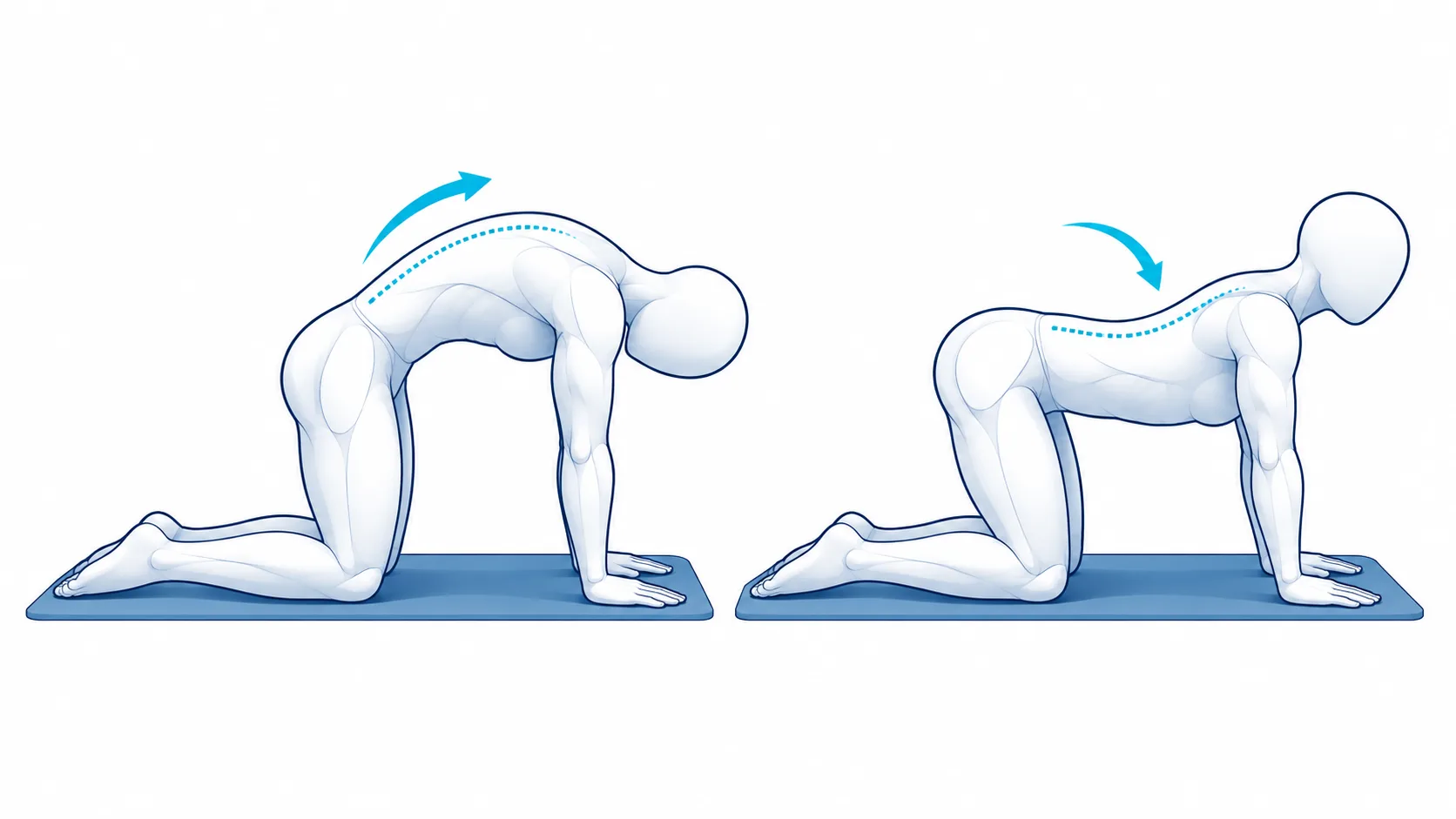
7. Cat–Cow Stretch
The cat–cow stretch is a gentle spinal mobilization exercise that encourages controlled movement of the spine in different directions. It can be performed to improve movement awareness in the lower back and upper back.
How to Perform the Exercise
- Get into a hands-and-knees position.
- As you exhale, slowly round your back upward.
- Gently lower your head toward the floor.
- Then, as you inhale, gently arch your back downward within your natural range of motion.
- Move slowly and smoothly between the positions without forcing the movements.
Recommended Practice: Perform 5–10 controlled repetitions.
Benefits: May support spinal mobility and improve controlled movement of the lower back and surrounding muscles.
Precautions: Do not attempt to bend your spine as far as possible. Individuals whose pain worsens with forward bending or backward extension should avoid moving in directions that aggravate their symptoms.
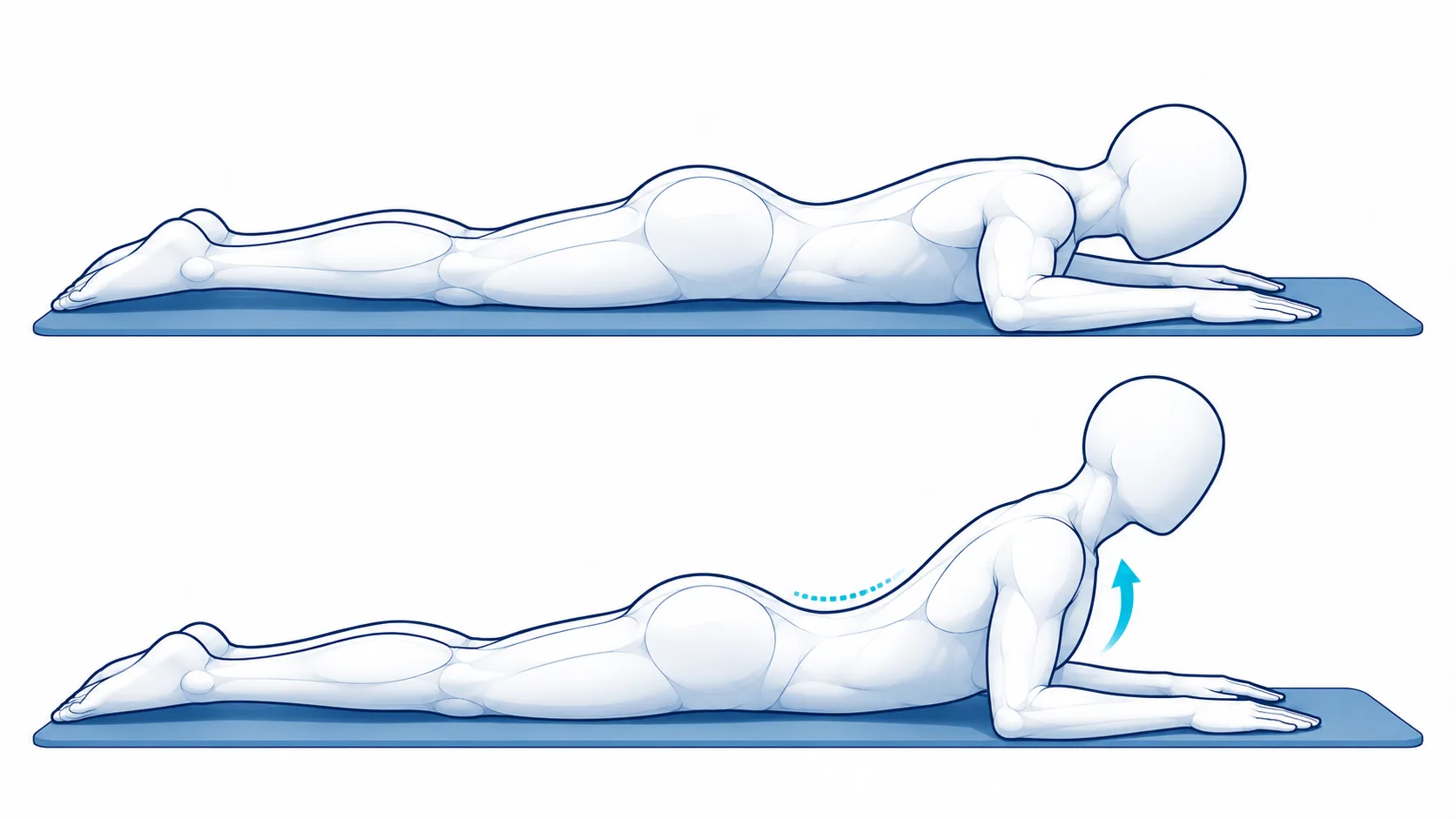
8. Prone on Elbows (Lumbar Extension Exercise)
The prone-on-elbows exercise involves gently extending the lower back backward in a controlled manner. It may help reduce symptoms in some patients with a lumbar herniated disc, although it is not suitable for everyone.
How to Perform the Exercise
- Lie on your stomach and relax your legs.
- Position your elbows directly beneath your shoulders.
- Using your forearms for support, slowly raise your head and chest.
- Keep your hips and pelvis as relaxed as possible.
- Hold a comfortable, pain-free position for a few seconds, then slowly return to the starting position.
Recommended Practice: If recommended by your healthcare professional, begin with 3–5 repetitions.
Benefits: For individuals who respond well to backward extension movements, this exercise may support lumbar mobility and help alleviate certain symptoms.
Precautions: Stop immediately if pain, numbness, or tingling radiating into your leg increases. This exercise is not suitable for individuals who cannot tolerate lumbar extension.
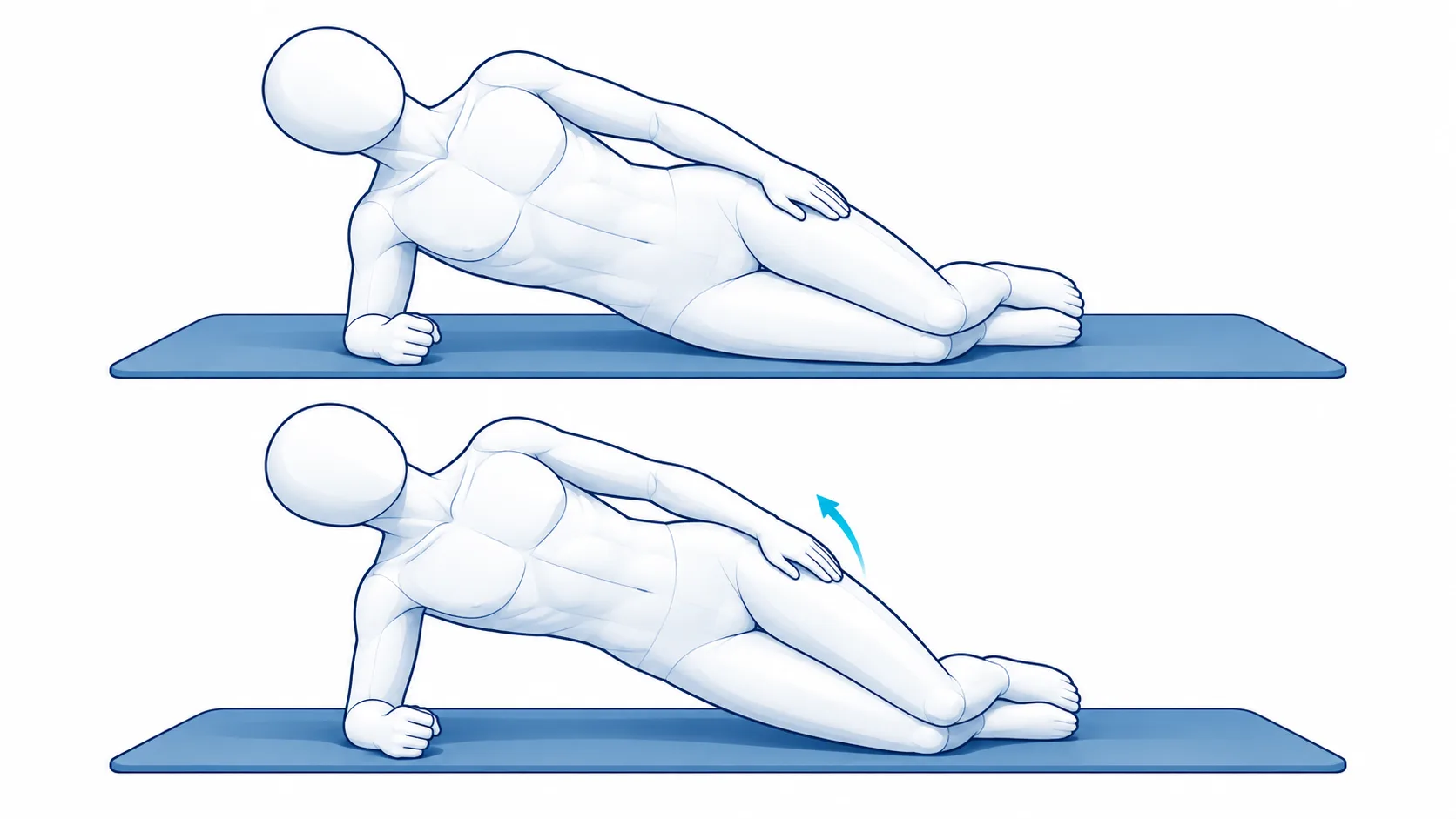
9. Modified Side Plank (Knee-Supported Side Plank)
The side plank is a stabilization exercise that primarily activates the oblique abdominal muscles and the muscles surrounding the hips. The knee-supported version shown in the image is an easier alternative to the traditional side plank.
How to Perform the Exercise
- Lie on your side with your knees slightly bent.
- Position your elbow directly beneath your shoulder.
- Using your forearm and knees for support, slowly lift your hips off the floor.
- Try to maintain a straight line from your shoulder through your hip to your knees.
- Hold the position for 5–10 seconds, then lower yourself back to the floor in a controlled manner.
Recommended Practice: Perform 3–5 repetitions on each side.
Benefits: May help strengthen the oblique abdominal muscles and hip muscles while improving overall core stability.
Precautions: Avoid placing excessive pressure on your shoulder. Do not rotate your trunk or strain your lower back while lifting your hips.
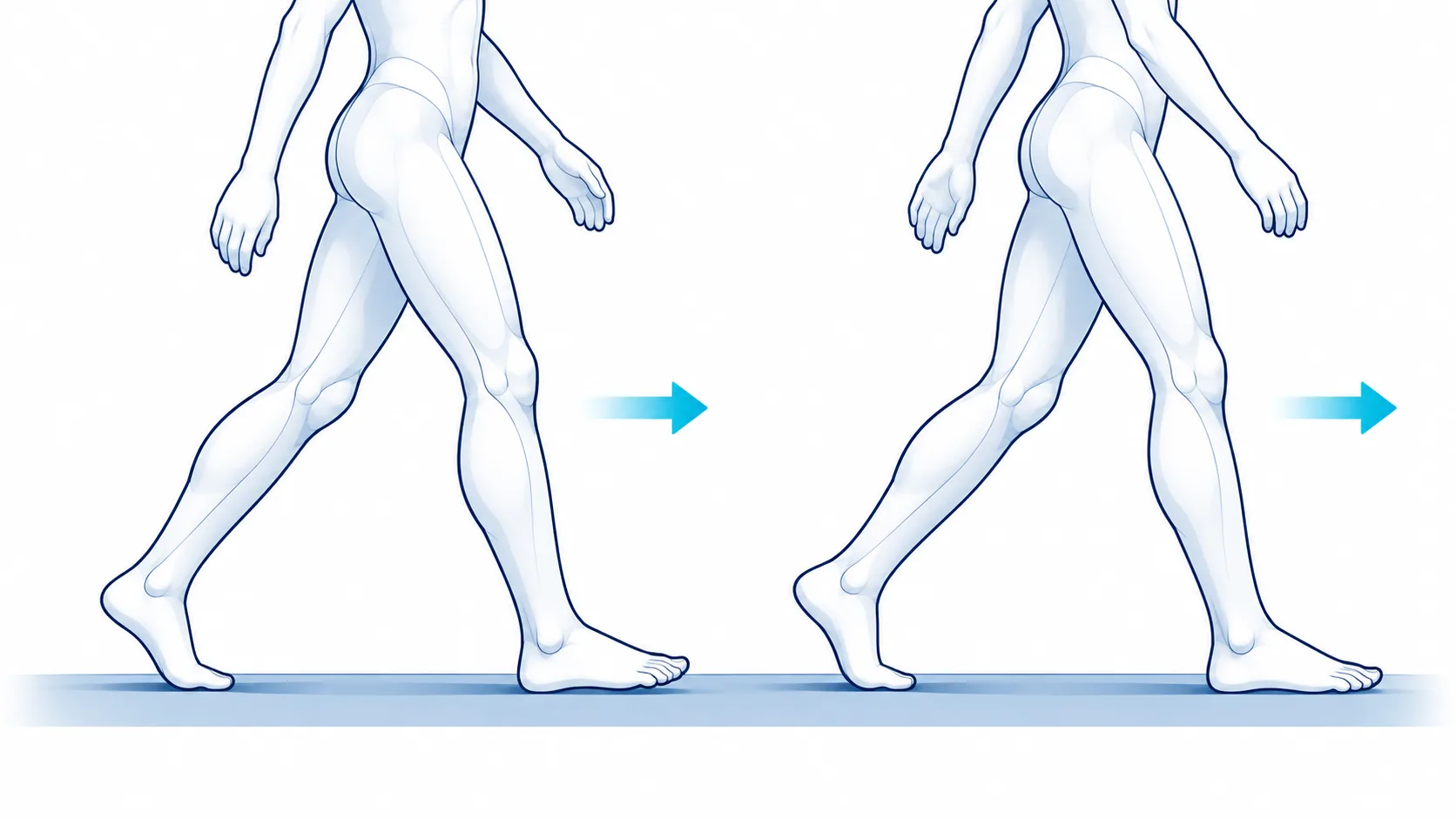
10. Controlled Walking Exercise
Image 10 – Supporting natural walking movements
Walking is a low-impact physical activity that can be incorporated into rehabilitation programs for suitable patients with a herniated disc. Regular walking within a comfortable tolerance may help reduce inactivity and maintain overall physical fitness.
How to Perform the Exercise
- Wear comfortable shoes and, if possible, begin walking on a flat surface.
- Keep your head upright and your shoulders relaxed.
- Walk using your natural stride length.
- Avoid leaning your trunk excessively forward or backward while walking.
- Take short rest breaks before your pain increases.
Recommended Practice: If tolerated, begin with short walks lasting 5–10 minutes. The duration can be increased gradually according to your symptoms and the recommendations of your healthcare professional.
Benefits: May support overall physical fitness, circulation, daily mobility, and tolerance for physical activity.
Precautions: Do not force yourself to continue walking if leg pain, numbness, or weakness increases. Walking duration should be adjusted according to your individual tolerance.
İçerik Bilgisi